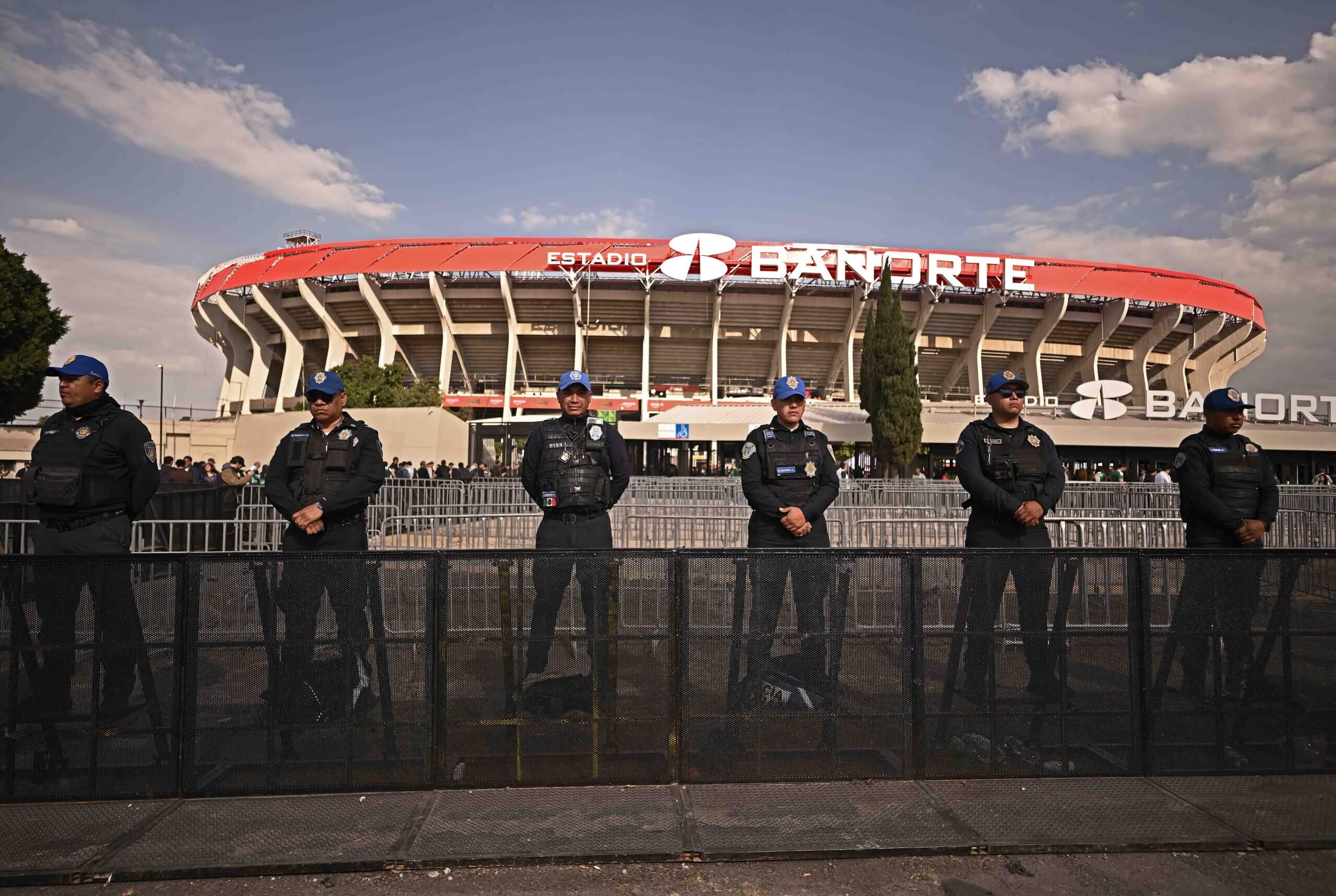
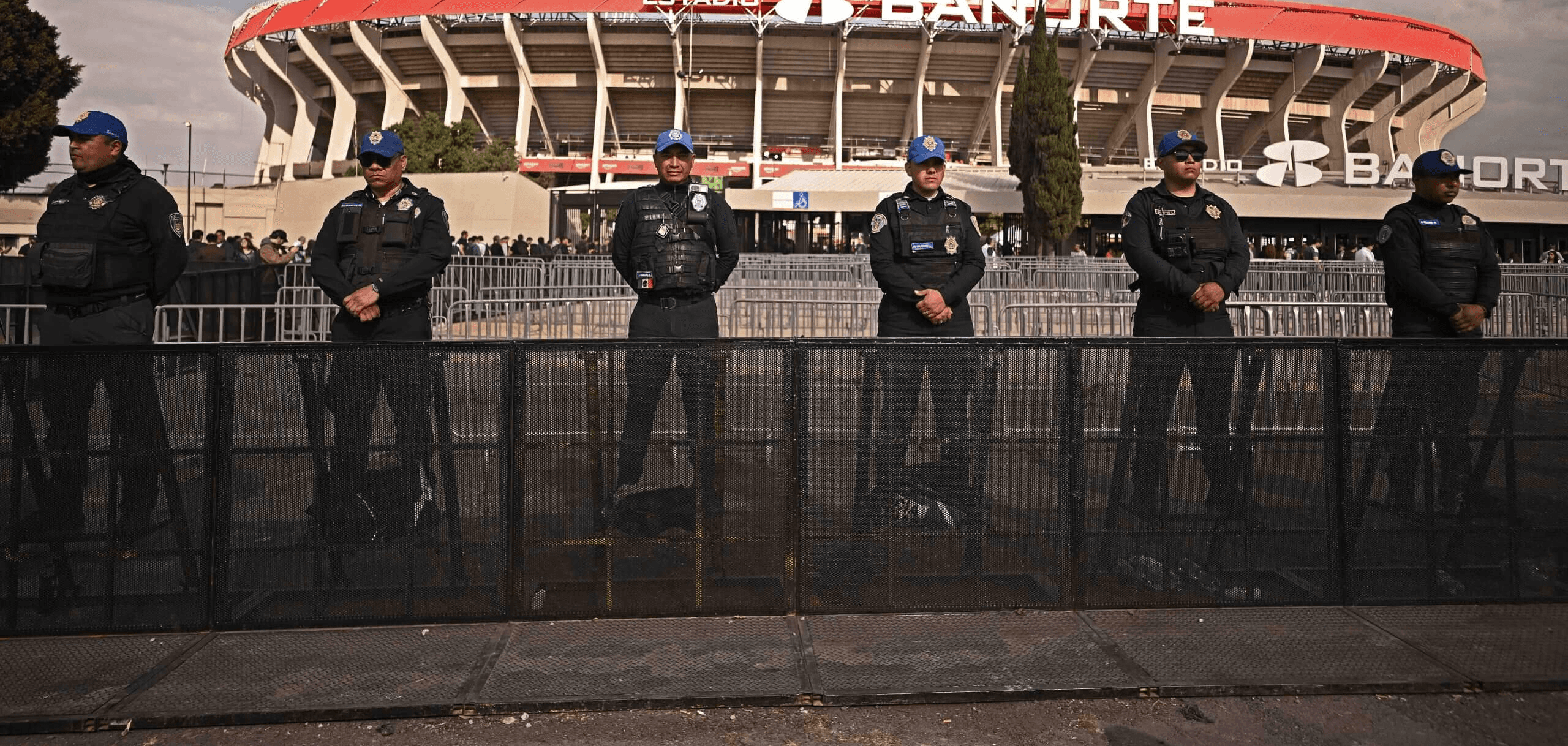
Police at Azteca Stadium Image© Carl de Souza / AFP via Getty Images
STADIUMS
By Sean Jacobs and Peter Alegi
Stadiums are never just places where football matches happen. They are architectural statements; places for business and entertainment (equipped with smart tech, and marketed as “entertainment hubs”); and spaces for loud assemblies where fans sing, chant, and sometimes smuggle in their politics. Stadiums, large and small, can feel like sacred shrines or provide the comfort of home in a crowd of strangers. They can even be great equalizers: spaces where the elites in luxurious suites and ordinary people behind the goalposts watch poor boys from immigrant neighborhoods in Europe or signed from marginal clubs in South America and Africa outshine academy graduates and pay-to-play prospects under the same floodlights. The anthropologist Christian Bromberger described the stadium as “one of the few spaces where a modern urban society can offer itself a material image of its unity and its differences.”
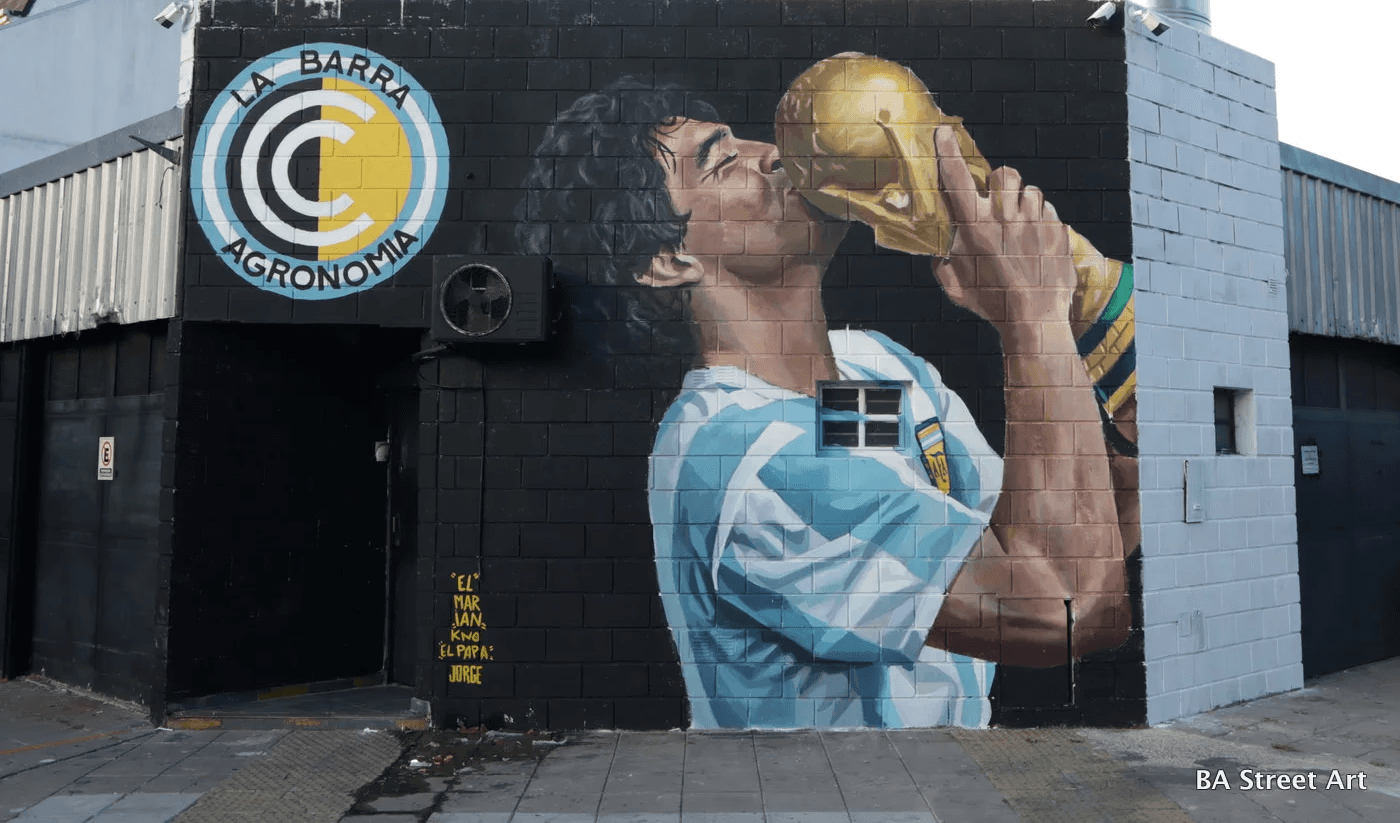
There are legendary stadiums. Diego Maradona called Boca Juniors’ La Bombonera in Buenos Aires “a temple of football,” a place where visiting stars lost their nerve. He transformed Napoli’s Stadio Maradona into a fortress, adored FNB Stadium in Johannesburg, and revered monumental arenas like Rio’s Maracanã, London’s Wembley Stadium, Mexico City’s Estadio Azteca, Barcelona’s Camp Nou, Madrid’s Santiago Bernabéu, and Liverpool’s Anfield - where the anthemic “You’ll Never Walk Alone” rises like a wall of sound.
Stadiums can be treacherous spaces. In Spain and Italy, and other nations, they sometimes turn into cauldrons of racist hatred, with vile chants aimed at Black players, foreign and domestic. Among die-hard ultras groups of European and South American clubs - and even national teams like Argentina - bigots often feel emboldened in their racism and xenophobia, many seeking the thrill of violent confrontation with enemy fans and the police. Stadiums can also serve as stages for the expression of political protests or dissent. In Tunisia, Algeria, Morocco, and Egypt, for example, supporters mock their governments’ complicity with the West and lip service on Palestine while tolerating Israel’s oppression. The terraces sometimes become megaphones for trenchant critiques and, occasionally, political mobilization.
Stadiums are never just places where football matches happen. They are architectural statements; places for business and entertainment (equipped with smart tech, and marketed as “entertainment hubs”); and spaces for loud assemblies where fans sing, chant, and sometimes smuggle in their politics. Stadiums, large and small, can feel like sacred shrines or provide the comfort of home in a crowd of strangers. They can even be great equalizers: spaces where the elites in luxurious suites and ordinary people behind the goalposts watch poor boys from immigrant neighborhoods in Europe or signed from marginal clubs in South America and Africa outshine academy graduates and pay-to-play prospects under the same floodlights. The anthropologist Christian Bromberger described the stadium as “one of the few spaces where a modern urban society can offer itself a material image of its unity and its differences.”
There are legendary stadiums. Diego Maradona called Boca Juniors’ La Bombonera in Buenos Aires “a temple of football,” a place where visiting stars lost their nerve. He transformed Napoli’s Stadio Maradona into a fortress, adored FNB Stadium in Johannesburg, and revered monumental arenas like Rio’s Maracanã, London’s Wembley Stadium, Mexico City’s Estadio Azteca, Barcelona’s Camp Nou, Madrid’s Santiago Bernabéu, and Liverpool’s Anfield - where the anthemic “You’ll Never Walk Alone” rises like a wall of sound.
Stadiums can be treacherous spaces. In Spain and Italy, and other nations, they sometimes turn into cauldrons of racist hatred, with vile chants aimed at Black players, foreign and domestic. Among die-hard ultras groups of European and South American clubs - and even national teams like Argentina - bigots often feel emboldened in their racism and xenophobia, many seeking the thrill of violent confrontation with enemy fans and the police. Stadiums can also serve as stages for the expression of political protests or dissent. In Tunisia, Algeria, Morocco, and Egypt, for example, supporters mock their governments’ complicity with the West and lip service on Palestine while tolerating Israel’s oppression. The terraces sometimes become megaphones for trenchant critiques and, occasionally, political mobilization.
Stadiums are never just places where football matches happen. They are architectural statements; places for business and entertainment (equipped with smart tech, and marketed as “entertainment hubs”); and spaces for loud assemblies where fans sing, chant, and sometimes smuggle in their politics. Stadiums, large and small, can feel like sacred shrines or provide the comfort of home in a crowd of strangers. They can even be great equalizers: spaces where the elites in luxurious suites and ordinary people behind the goalposts watch poor boys from immigrant neighborhoods in Europe or signed from marginal clubs in South America and Africa outshine academy graduates and pay-to-play prospects under the same floodlights. The anthropologist Christian Bromberger described the stadium as “one of the few spaces where a modern urban society can offer itself a material image of its unity and its differences.”
There are legendary stadiums. Diego Maradona called Boca Juniors’ La Bombonera in Buenos Aires “a temple of football,” a place where visiting stars lost their nerve. He transformed Napoli’s Stadio Maradona into a fortress, adored FNB Stadium in Johannesburg, and revered monumental arenas like Rio’s Maracanã, London’s Wembley Stadium, Mexico City’s Estadio Azteca, Barcelona’s Camp Nou, Madrid’s Santiago Bernabéu, and Liverpool’s Anfield - where the anthemic “You’ll Never Walk Alone” rises like a wall of sound.
Stadiums can be treacherous spaces. In Spain and Italy, and other nations, they sometimes turn into cauldrons of racist hatred, with vile chants aimed at Black players, foreign and domestic. Among die-hard ultras groups of European and South American clubs - and even national teams like Argentina - bigots often feel emboldened in their racism and xenophobia, many seeking the thrill of violent confrontation with enemy fans and the police. Stadiums can also serve as stages for the expression of political protests or dissent. In Tunisia, Algeria, Morocco, and Egypt, for example, supporters mock their governments’ complicity with the West and lip service on Palestine while tolerating Israel’s oppression. The terraces sometimes become megaphones for trenchant critiques and, occasionally, political mobilization.
Discussion questions:
Who gets to decide where World Cup stadiums are built or upgraded?
How do the politics of stadiums differ across the U.S., Mexico, and Canada as co-hosts?
How do stadium decisions shape who feels welcomed or excluded at the World Cup?
How do stadiums reflect power between FIFA, host cities, national governments, and local communities, and who benefits the most from it?
In what ways can stadiums become tools of city branding or national image-making?
What kinds of labor, displacement, or infrastructure costs are hidden behind stadium upgrades?
READINGS
FREE TO ACCESS SOURCES
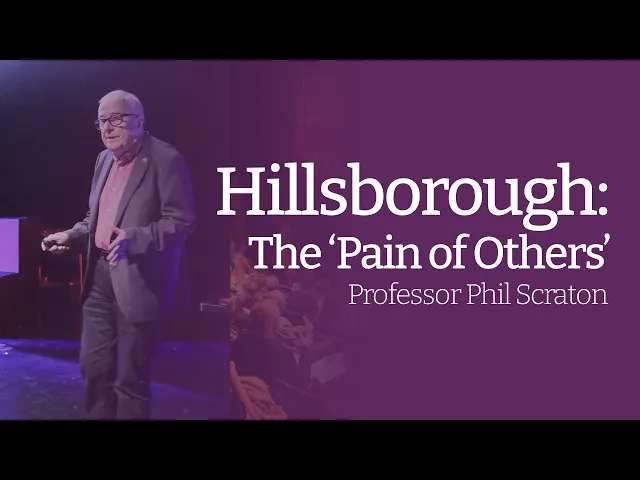
Phil Scraton, “Hillsborough: The 'Pain of Others',” April 29, 2024
Phil Scraton, “Hillsborough: The 'Pain of Others',” April 29, 2024
Andrew Zimbalist, “Stadiums as Public Investments,” Econofact, Sept. 4, 2023
Andrew Zimbalist, “Stadiums as Public Investments,” Econofact, Sept. 4, 2023
ADDITIONAL SOURCES
Frank A. Guridy, The Stadium: An American History of Politics, Protest, and Play (Basic Books, 2024);
Frank A. Guridy, The Stadium: An American History of Politics, Protest, and Play (Basic Books, 2024);
Christopher Gaffney, Temples of the Earthbound Gods: Stadiums in the Cultural Landscapes of Rio de Janeiro and Buenos Aires (University of Texas Press, 2010);
Christopher Gaffney, Temples of the Earthbound Gods: Stadiums in the Cultural Landscapes of Rio de Janeiro and Buenos Aires (University of Texas Press, 2010);
Peter Alegi, “‘A Nation To Be Reckoned With’: The Politics of World Cup Stadium Construction in Cape Town and Durban, South Africa,” African Studies 67, no. 3 (2008): 397–422;
Peter Alegi, “‘A Nation To Be Reckoned With’: The Politics of World Cup Stadium Construction in Cape Town and Durban, South Africa,” African Studies 67, no. 3 (2008): 397–422;
READ NEXT
World Cup: The Syllabus is a project of the Global Sport Lab and the Jackson School of International Studies at the University of Washington.

CONTACT US
The Henry M. Jackson School of International Studies
2023 Skagit Lane, Thomson Hall, Box 353650 Seattle, WA 98195-3650
T: (206) 543-4370


Text on this page created by the Global Sport Lab at the
University of Washington is licensed under a CC BY-NC 4.0 license.
Images and video are not included.
CONTACT US
The Henry M. Jackson School of International Studies
2023 Skagit Lane, Thomson Hall, Box 353650 Seattle, WA 98195-3650
T: (206) 543-4370
Text on this page created by the Global Sport Lab at the
University of Washington is licensed under a CC BY-NC 4.0 license.
Images and video are not included.

CONTACT US
Text on this page created by the Global Sport Lab at the
University of Washington is licensed under a CC BY-NC 4.0 license.
Images and video are not included.
CONTACT US
Text on this page created by the Global Sport Lab at the
University of Washington is licensed under a CC BY-NC 4.0 license.
Images and video are not included.