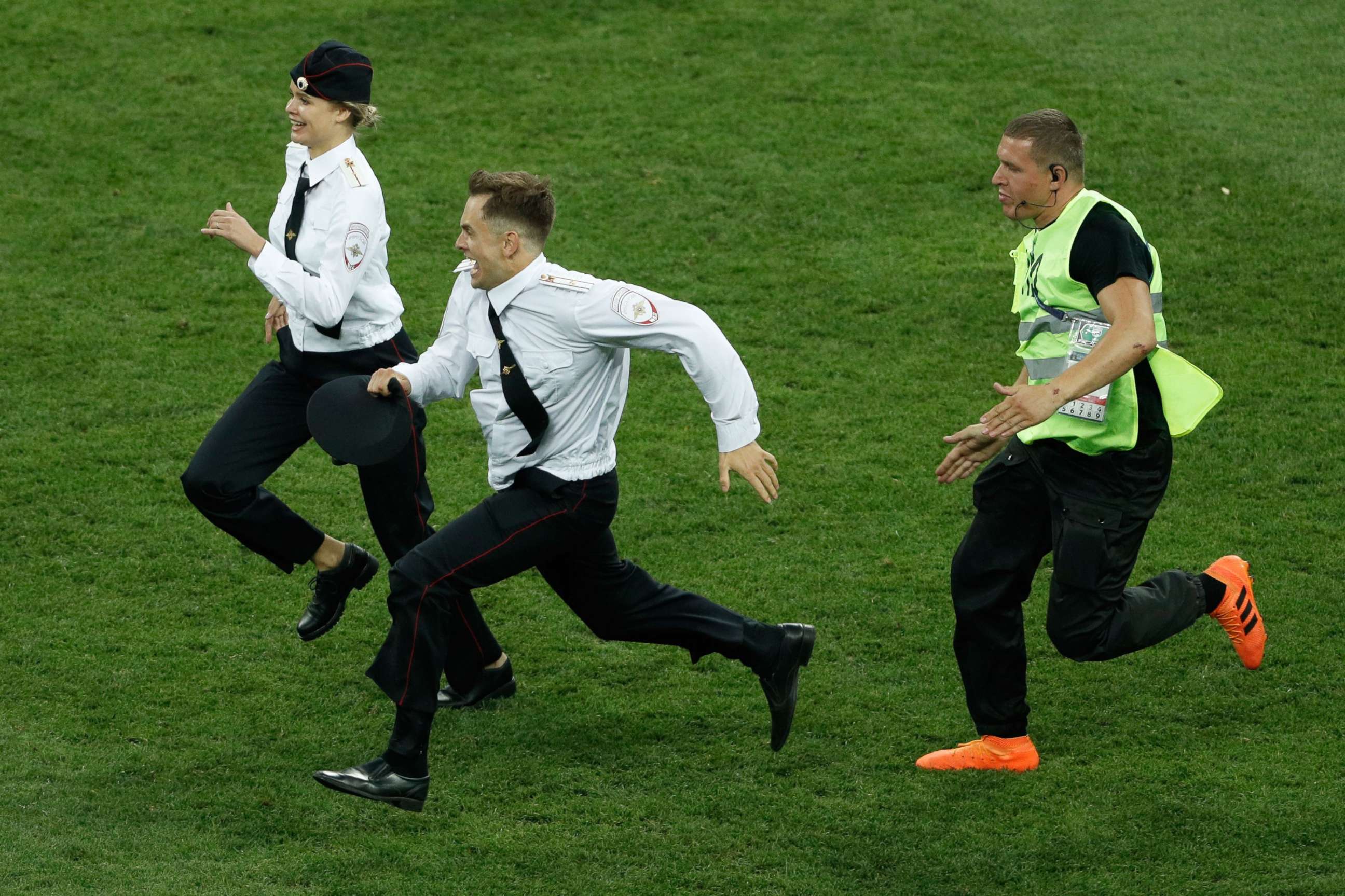
Protesting Pussy Riot members are chased on the football pitch by a security member during the Russia 2018 World Cup final football match between France and Croatia at the Luzhniki Stadium in Moscow, July 15, 2018. Image© Adrian Dennis/AFP/Getty Images
PROTEST AND RESISTANCE
PROTEST AND
RESISTANCE
By Brenda Elsey and Sean Jacobs
Global football is tightly managed, security is heavy, rules are strict and on the surface, protest seems impossible - by design. While football can bring feelings of elation and freedom to athletes and supporters alike, mega-events like the World Cup often restrict expression.
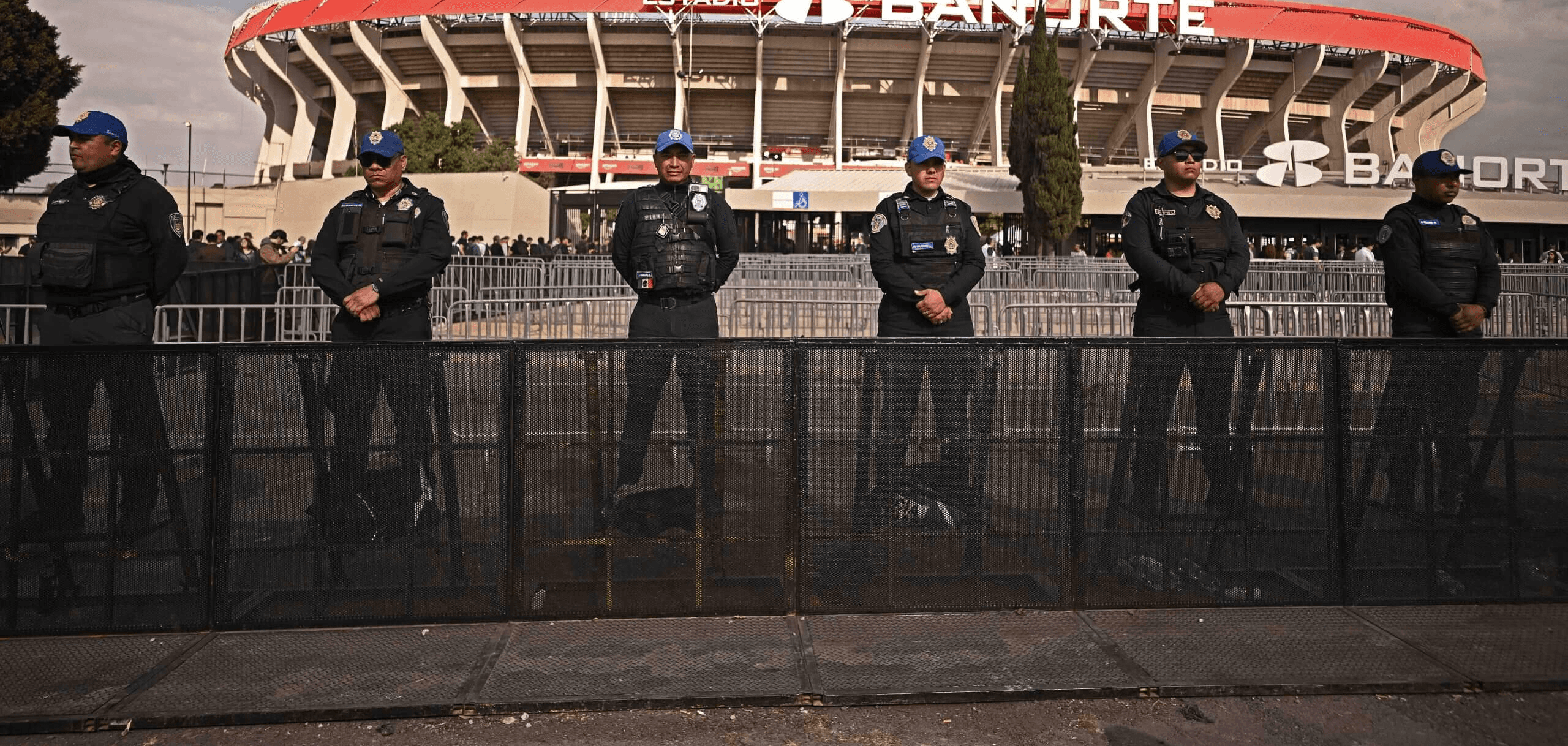
Fans are searched before entering stadiums. Banners are confiscated. Governing bodies such as FIFA ban “political” messages on uniforms, in stadiums, or during matches. Television broadcasts smooth over the crowd, chants are muted, and conflict is edited out.
Yet protest still finds its way in. Protest takes many forms. Sometimes it is carnivalesque. Fans sing, chant, and stage elaborate displays at club games around the world.
In 1966, newly independent African countries, led by Ghana’s President Kwame Nkrumah, boycotted the World Cup. Europe had 10 places, South America 4, North America 1, while Africa and Asia shared 1 playoff spot. Ethiopian official Tessema Yidnekatchew called the arrangement “a mockery.” Stung by the embarrassment and a diminished claim to global legitimacy, FIFA conceded: Africa received its first guaranteed place at the 1970 World Cup.
Fans organized protests throughout the 1974 FIFA World Cup in opposition to the Chilean dictator, Augusto Pinochet. In Berlin’s Olympic Stadium, exiles and their allies held banners replacing the “CH” in Pinochet with a swastika. Pitch invaders managed to stop Chile’s match against Australia, holding up the sign, “Chile Socialista” long enough for cameras to capture it, before the police dragged them away.
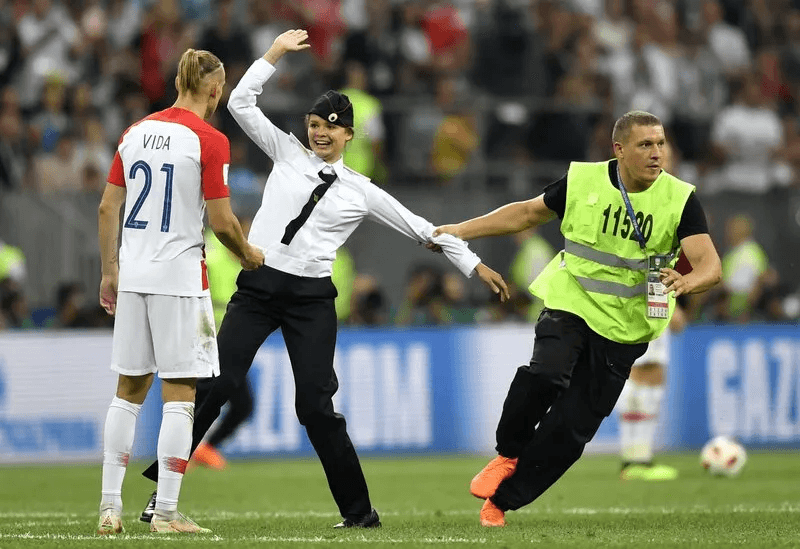
While the Argentine military junta used the 1978 World Cup to legitimize its power and crush critical journalism, it could not erase all human rights’ protests. The Madres of Plaza de Mayo haunted the games with their photographs of disappeared daughters and sons. A few Dutch players visited with the Mothers and the team boycotted a dinner with the generals in a show of solidarity with the opposition. The 2014 FIFA World Cup in Brazil became a stage for demonstrations against corruption and neoliberal reforms. During the 2022 FIFA World Cup in Qatar, critics raised issues of migrant labor conditions, LGBTQ rights, and Palestinian solidarity. And the feminist punk protest group Pussy Riot famously disrupted the 2018 final in Russia.
Player-led protests, supported by fans, at the Women’s World Cup (especially 2015, 2019, and 2023) focused on gender equality or labor conditions, including wages and playing conditions. At other times, it is coded. Players reveal slogans beneath jerseys. Teams observe moments of silence. Walk-offs, though rare, carry symbolic weight.
Not all protests are progressive. Right-wing movements have also mobilized around tournaments, including during the 2014 World Cup in Brazil.
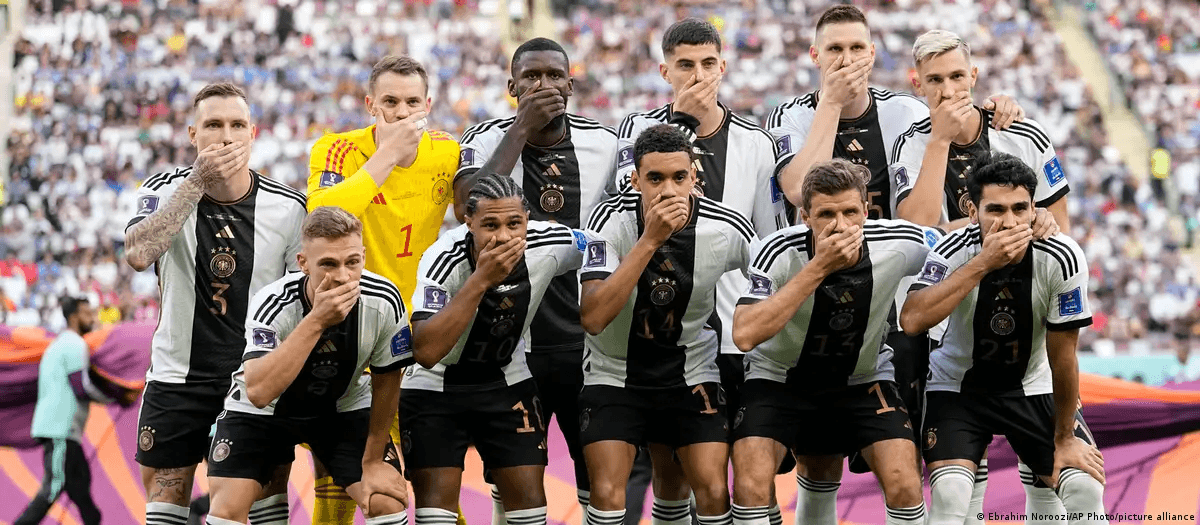
Players now command vast audiences in the social media era. Their gestures can reverberate politically. Yet national teams remain difficult spaces for dissent. They embody the state, the flag, and patriotism. At Qatar 2022, the England men's national football team first promised, then abandoned, a plan for the captain to wear an LGBTQ armband. The retreat exposed the limits of protest within football’s global spectacle.
Global football is tightly managed, security is heavy, rules are strict and on the surface, protest seems impossible - by design. While football can bring feelings of elation and freedom to athletes and supporters alike, mega-events like the World Cup often restrict expression.
Fans are searched before entering stadiums. Banners are confiscated. Governing bodies such as FIFA ban “political” messages on uniforms, in stadiums, or during matches. Television broadcasts smooth over the crowd, chants are muted, and conflict is edited out.
Yet protest still finds its way in. Protest takes many forms. Sometimes it is carnivalesque. Fans sing, chant, and stage elaborate displays at club games around the world.
In 1966, newly independent African countries, led by Ghana’s President Kwame Nkrumah, boycotted the World Cup. Europe had 10 places, South America 4, North America 1, while Africa and Asia shared 1 playoff spot. Ethiopian official Tessema Yidnekatchew called the arrangement “a mockery.” Stung by the embarrassment and a diminished claim to global legitimacy, FIFA conceded: Africa received its first guaranteed place at the 1970 World Cup.
Fans organized protests throughout the 1974 FIFA World Cup in opposition to the Chilean dictator, Augusto Pinochet. In Berlin’s Olympic Stadium, exiles and their allies held banners replacing the “CH” in Pinochet with a swastika. Pitch invaders managed to stop Chile’s match against Australia, holding up the sign, “Chile Socialista” long enough for cameras to capture it, before the police dragged them away.
While the Argentine military junta used the 1978 World Cup to legitimize its power and crush critical journalism, it could not erase all human rights’ protests. The Madres of Plaza de Mayo haunted the games with their photographs of disappeared daughters and sons. A few Dutch players visited with the Mothers and the team boycotted a dinner with the generals in a show of solidarity with the opposition. The 2014 FIFA World Cup in Brazil became a stage for demonstrations against corruption and neoliberal reforms. During the 2022 FIFA World Cup in Qatar, critics raised issues of migrant labor conditions, LGBTQ rights, and Palestinian solidarity. And the feminist punk protest group Pussy Riot famously disrupted the 2018 final in Russia.
Player-led protests, supported by fans, at the Women’s World Cup (especially 2015, 2019, and 2023) focused on gender equality or labor conditions, including wages and playing conditions. At other times, it is coded. Players reveal slogans beneath jerseys. Teams observe moments of silence. Walk-offs, though rare, carry symbolic weight.
Not all protests are progressive. Right-wing movements have also mobilized around tournaments, including during the 2014 World Cup in Brazil.
Players now command vast audiences in the social media era. Their gestures can reverberate politically. Yet national teams remain difficult spaces for dissent. They embody the state, the flag, and patriotism. At Qatar 2022, the England men's national football team first promised, then abandoned, a plan for the captain to wear an LGBTQ armband. The retreat exposed the limits of protest within football’s global spectacle.
Global football is tightly managed, security is heavy, rules are strict and on the surface, protest seems impossible - by design. While football can bring feelings of elation and freedom to athletes and supporters alike, mega-events like the World Cup often restrict expression.
Fans are searched before entering stadiums. Banners are confiscated. Governing bodies such as FIFA ban “political” messages on uniforms, in stadiums, or during matches. Television broadcasts smooth over the crowd, chants are muted, and conflict is edited out.
Yet protest still finds its way in. Protest takes many forms. Sometimes it is carnivalesque. Fans sing, chant, and stage elaborate displays at club games around the world.
In 1966, newly independent African countries, led by Ghana’s President Kwame Nkrumah, boycotted the World Cup. Europe had 10 places, South America 4, North America 1, while Africa and Asia shared 1 playoff spot. Ethiopian official Tessema Yidnekatchew called the arrangement “a mockery.” Stung by the embarrassment and a diminished claim to global legitimacy, FIFA conceded: Africa received its first guaranteed place at the 1970 World Cup.
Fans organized protests throughout the 1974 FIFA World Cup in opposition to the Chilean dictator, Augusto Pinochet. In Berlin’s Olympic Stadium, exiles and their allies held banners replacing the “CH” in Pinochet with a swastika. Pitch invaders managed to stop Chile’s match against Australia, holding up the sign, “Chile Socialista” long enough for cameras to capture it, before the police dragged them away.
While the Argentine military junta used the 1978 World Cup to legitimize its power and crush critical journalism, it could not erase all human rights’ protests. The Madres of Plaza de Mayo haunted the games with their photographs of disappeared daughters and sons. A few Dutch players visited with the Mothers and the team boycotted a dinner with the generals in a show of solidarity with the opposition. The 2014 FIFA World Cup in Brazil became a stage for demonstrations against corruption and neoliberal reforms. During the 2022 FIFA World Cup in Qatar, critics raised issues of migrant labor conditions, LGBTQ rights, and Palestinian solidarity. And the feminist punk protest group Pussy Riot famously disrupted the 2018 final in Russia.
Player-led protests, supported by fans, at the Women’s World Cup (especially 2015, 2019, and 2023) focused on gender equality or labor conditions, including wages and playing conditions. At other times, it is coded. Players reveal slogans beneath jerseys. Teams observe moments of silence. Walk-offs, though rare, carry symbolic weight.
Not all protests are progressive. Right-wing movements have also mobilized around tournaments, including during the 2014 World Cup in Brazil.
Players now command vast audiences in the social media era. Their gestures can reverberate politically. Yet national teams remain difficult spaces for dissent. They embody the state, the flag, and patriotism. At Qatar 2022, the England men's national football team first promised, then abandoned, a plan for the captain to wear an LGBTQ armband. The retreat exposed the limits of protest within football’s global spectacle.
Discussion questions:
Is there value to boycott versus critical engagement? How have protest movements dealt with the power of commercial interests at the World Cup?
Can World Cup protests forward certain political agendas more effectively than others, for example, gender pay equity compared to authoritarian violence?
Why has the World Cup repeatedly become a stage for political protest, despite efforts by FIFA to keep politics out of football?
What risks do players, teams, or nations take when they protest at the World Cup?
READINGS
FREE TO ACCESS SOURCES
James Riordan, "Football: Nation, City and the Dream," Soccer & Society 8, no. 4 (2007): 545–560.
James Riordan, "Football: Nation, City and the Dream," Soccer & Society 8, no. 4 (2007): 545–560.
Tore Unstad Steiro and Hallgeir Gammelsæter, "Fan protest and activism: football from below in South-Eastern Europe," Soccer & Society 18, no. 4 (2017): 417–426.
Tore Unstad Steiro and Hallgeir Gammelsæter, "Fan protest and activism: football from below in South-Eastern Europe," Soccer & Society 18, no. 4 (2017): 417–426.
Torcuato Di Tella, "The Ambiguities of Football, Politics, Culture, and Social Transformation in Latin America," Sociological Research Online 2, no. 4 (1997).
Torcuato Di Tella, "The Ambiguities of Football, Politics, Culture, and Social Transformation in Latin America," Sociological Research Online 2, no. 4 (1997).
ADDITIONAL SOURCES
Robert Edelman, Spartak Moscow: A History of The People’s Team in the Workers’ State (Cornell University Press, 2010);
Robert Edelman, Spartak Moscow: A History of The People’s Team in the Workers’ State (Cornell University Press, 2010);
Peter Alegi, Laduma! Soccer, Politics, and Society in South Africa (University of KwaZulu-Natal Press, 2010 [2nd edition]);
Peter Alegi, Laduma! Soccer, Politics, and Society in South Africa (University of KwaZulu-Natal Press, 2010 [2nd edition]);
Gabriel Kuhn, Soccer vs. the State: Tackling Football and Radical Politics (PM Press, 2011);
Gabriel Kuhn, Soccer vs. the State: Tackling Football and Radical Politics (PM Press, 2011);
Joseph L. Arbena, “Generals and Goles: assessing the connection between the military and soccer in Argentina,” International Journal of the History of Sport 7, no. 1 (1990): 120–130.
Joseph L. Arbena, “Generals and Goles: assessing the connection between the military and soccer in Argentina,” International Journal of the History of Sport 7, no. 1 (1990): 120–130.
Simón, Juan Antonio. Football and International Relations Under Francoism, 1937-1975 (Routledge, 2025).
Simón, Juan Antonio. Football and International Relations Under Francoism, 1937-1975 (Routledge, 2025).
Simón, Juan. 2020. “Fighting against Oblivion: The Legacy of the 1982 World Cup, or the First Challenge of Democratic Spain.” Soccer & Society 21 (8): 918–31.
Simón, Juan. 2020. “Fighting against Oblivion: The Legacy of the 1982 World Cup, or the First Challenge of Democratic Spain.” Soccer & Society 21 (8): 918–31.
Simón, Juan Antonio, and Carlos García-Martí. 2019. “1982 FIFA World Cup: From Spain’s Struggle for Democratic Legitimacy to Italy’s Rediscovery of Football Nationalism.” Soccer & Society 20 (7–8): 948–59.
Simón, Juan Antonio, and Carlos García-Martí. 2019. “1982 FIFA World Cup: From Spain’s Struggle for Democratic Legitimacy to Italy’s Rediscovery of Football Nationalism.” Soccer & Society 20 (7–8): 948–59.
Prishani Naidoo and Zanele Muholi, “Women’s Bodies and the World of Football in South Africa,” in Ashwin Desai (ed.), The Race to Transform: Sport in Post-Apartheid South Africa (HSRC Press, 2010): 105–145.
Prishani Naidoo and Zanele Muholi, “Women’s Bodies and the World of Football in South Africa,” in Ashwin Desai (ed.), The Race to Transform: Sport in Post-Apartheid South Africa (HSRC Press, 2010): 105–145.
Cynthia F. Pelak, “Women and gender in South African soccer: a brief history,” Soccer & Society 11, nos. 1–2 (2010): 63–78
Cynthia F. Pelak, “Women and gender in South African soccer: a brief history,” Soccer & Society 11, nos. 1–2 (2010): 63–78
READ NEXT
World Cup: The Syllabus is a project of the Global Sport Lab and the Jackson School of International Studies at the University of Washington.

CONTACT US
The Henry M. Jackson School of International Studies
2023 Skagit Lane, Thomson Hall, Box 353650 Seattle, WA 98195-3650
T: (206) 543-4370


Text on this page created by the Global Sport Lab at the
University of Washington is licensed under a CC BY-NC 4.0 license.
Images and video are not included.
CONTACT US
The Henry M. Jackson School of International Studies
2023 Skagit Lane, Thomson Hall, Box 353650 Seattle, WA 98195-3650
T: (206) 543-4370
Text on this page created by the Global Sport Lab at the
University of Washington is licensed under a CC BY-NC 4.0 license.
Images and video are not included.

CONTACT US
Text on this page created by the Global Sport Lab at the
University of Washington is licensed under a CC BY-NC 4.0 license.
Images and video are not included.
CONTACT US
Text on this page created by the Global Sport Lab at the
University of Washington is licensed under a CC BY-NC 4.0 license.
Images and video are not included.